
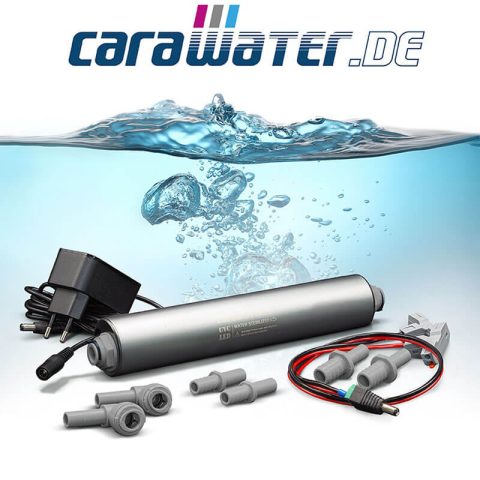
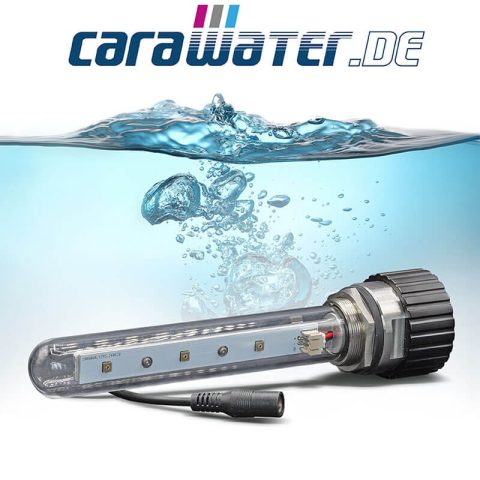
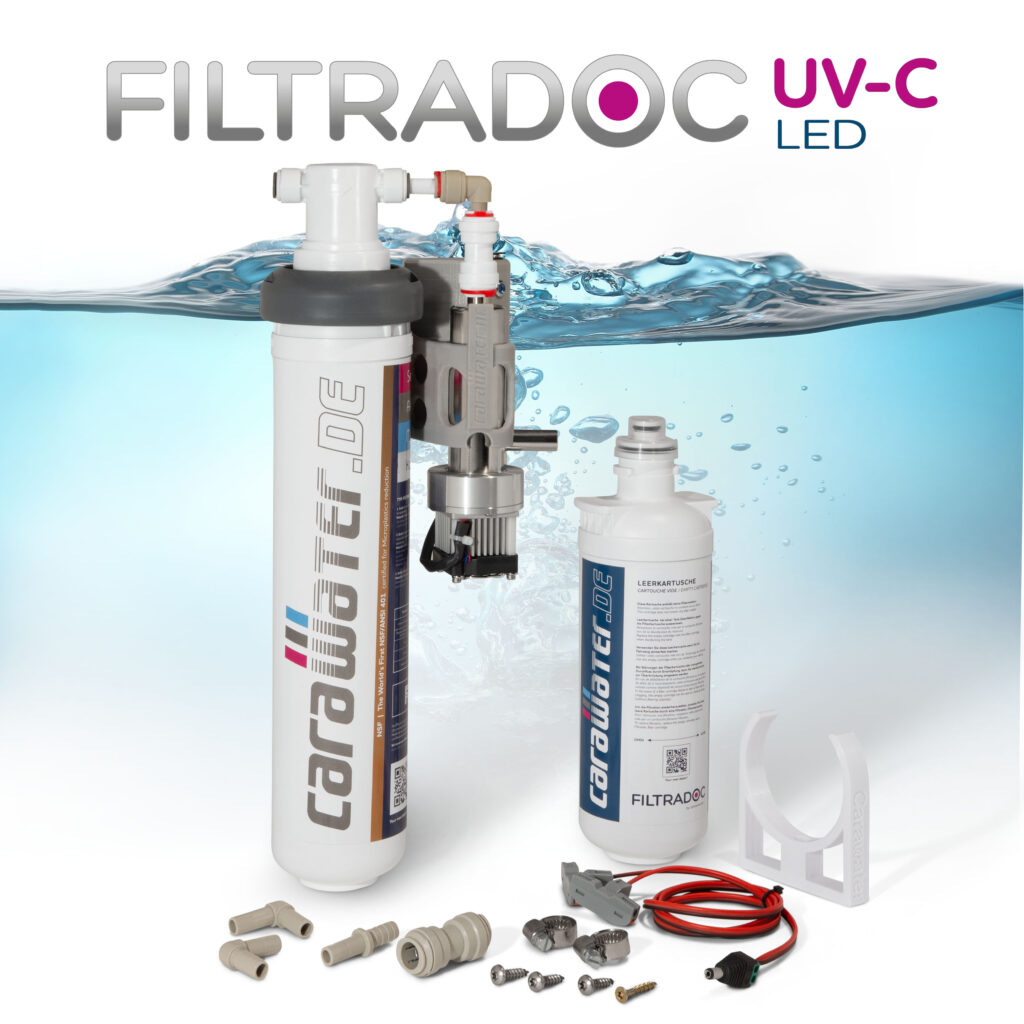
Attacking when the opponent is the most vulnerable, including chlorine-resistant pathogenic organisms was the design basis of the Carawater UV-C LED. To achieve this Carawater in partnership with Stanley Electric Japan have produced the most efficient UV-C LED Filtration system incorporating Stanley Electric’s patented 265nm UVC-High power-LEDs.
As an automotive supplier, the LEDs developed and produced by Stanley Electric used the Carawater UV-C LED Reactors not only feature the most efficient wavelength but are also manufactured and certified to the highest automotive industry standards making them the only logical choice for all mobile applications including off road and marine applications.
UNDERSTANDING THE IMPACT OF UV-C
UV-C has the highest sterilizing effect out of all ultraviolet light
Ultraviolet spectrum divided into 3 categories
Ultraviolet is invisible light to the naked eye with a wavelength of 10 to 400 nm. Within this range, light with a wavelength of 100 to 280 nm, referred to as UV-C (deep ultraviolet), does not exist on the earth but has a wide range of functions such as disinfection, decomposition of organic matter, photopolymerization and sensing. Stanley Electric has technologies to develop and manufacture UV-C light sources.
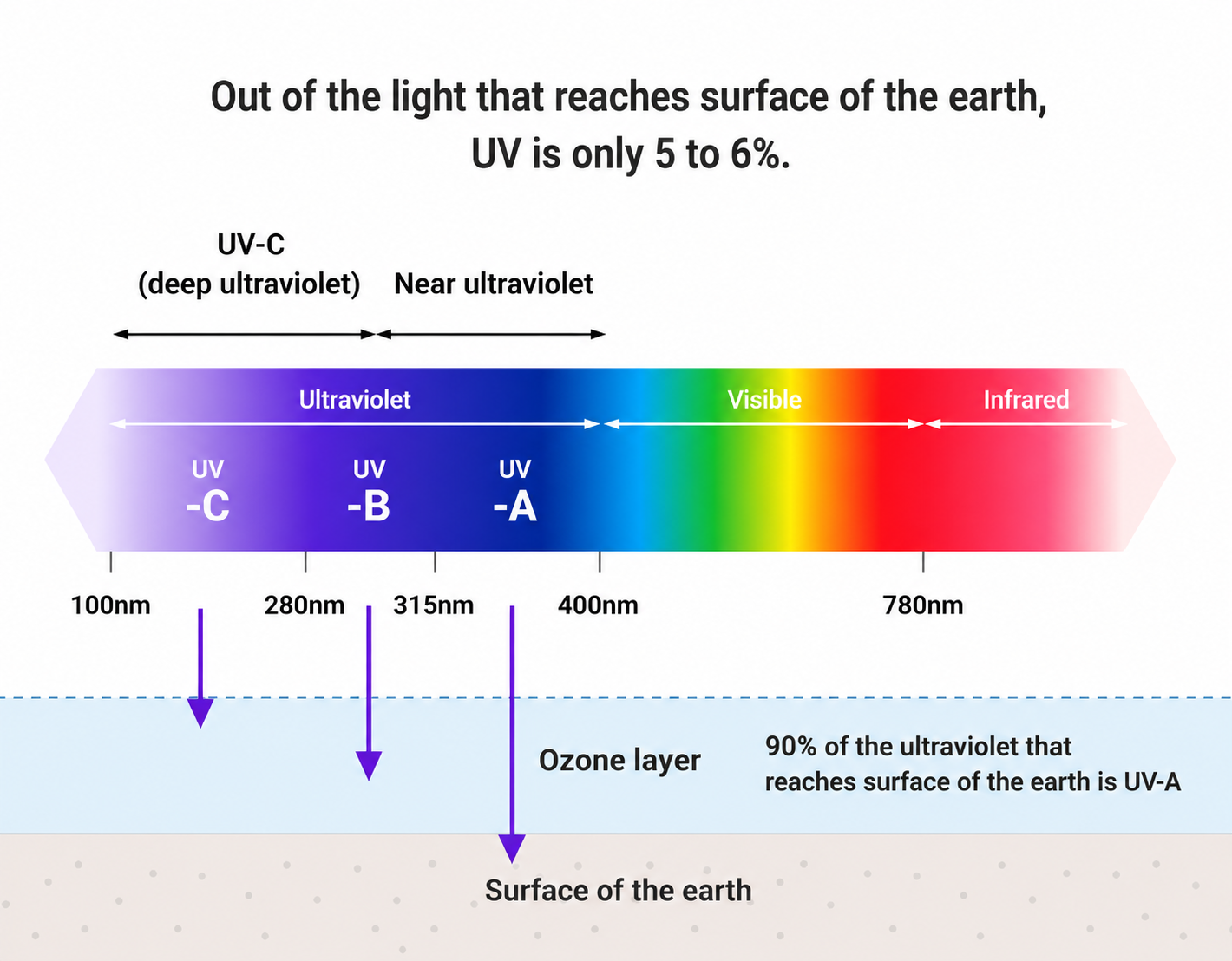
Light spectrum divided by wavelengths
UV Light Divided By Spectrum
In general, ultraviolet refers to UV-A and UV-B. Among these two types of ultraviolet that reach the earth’s surface, UV-A covers about 90% and UV-B the remainder. Though UV-C does not reach the earth and has no daily impact, it has the highest sterilising effect to inactivate viruses and bacteria out of all ultraviolet light.
UV-A | 315 to 400 nm Most of this passes through the ozone layer and reaches earth’s surface. |
UV-B | 280 to 315 nm This is mostly absorbed by the ozone layer although some of it passes through. |
UV-C | 100 to 280 nm As it is absorbed in the ozone layer, does not reach the surface of the earth. |
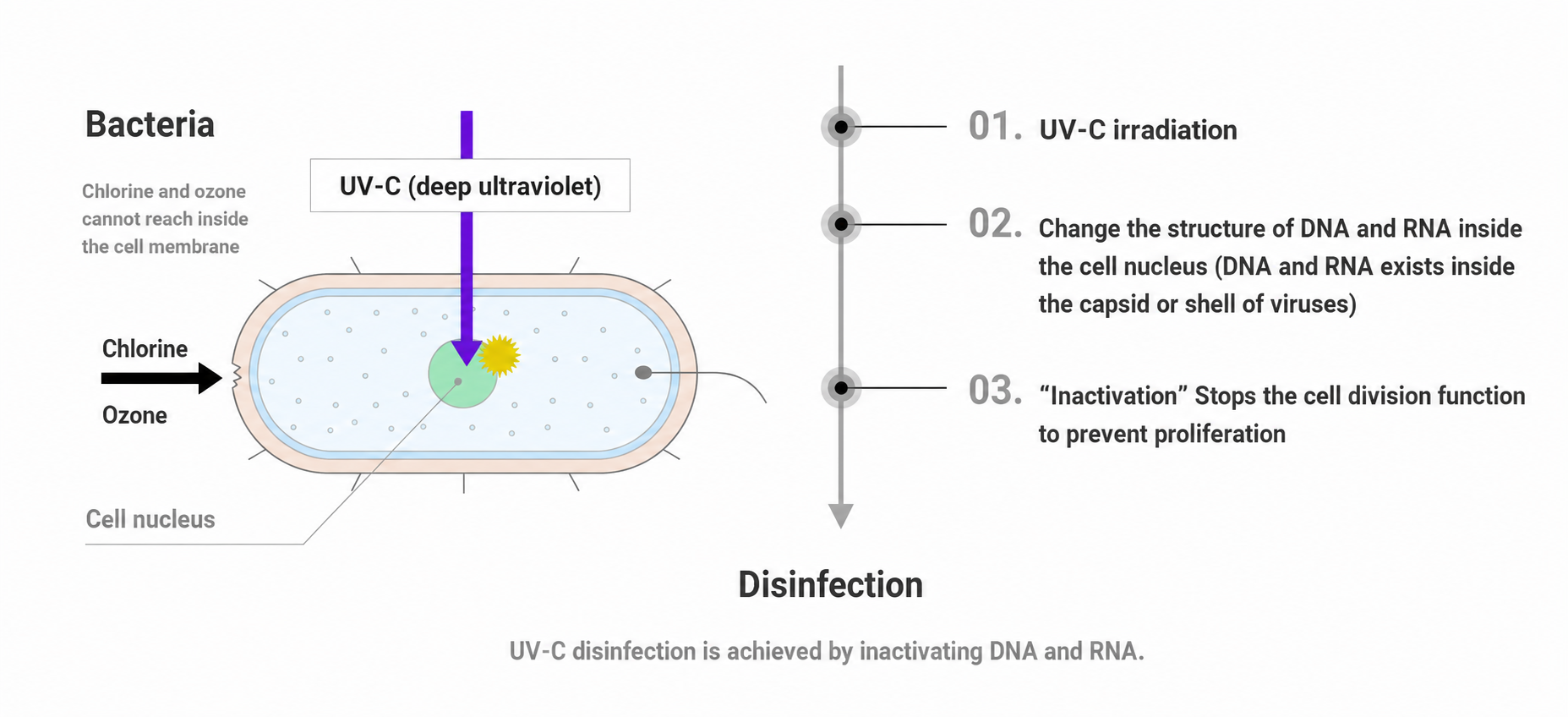
How Does UV-C Disinfection Work
Bacteria and viruses proliferate by cell division based on genetic information to cause infection and illness. DNA and RNA holds the genetic information necessary for this proliferation to occur. Irradiating with UV-C changes the helix structure of DNA and RNA of held by bacteria and viruses, which can inactivate these bacteria and viruses resulting in reducing their proliferation.
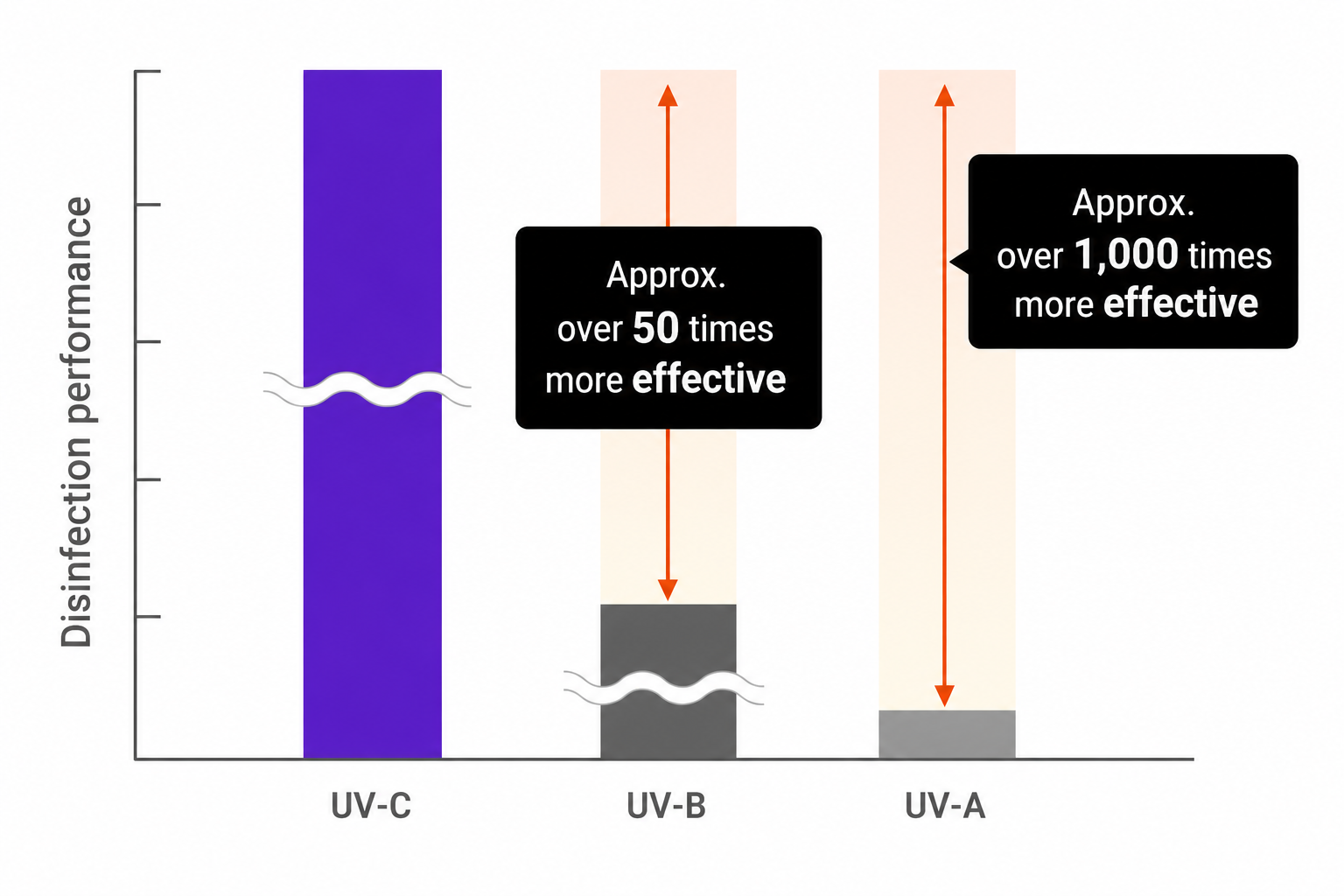
DISINFECTION EFFECT VARIES DEPENDING ON UV WAVELENGTH & EXPOSURE
The disinfection effect on DNA and RNA of bacteria and viruses depends a lot on the UV wavelength and the level of exposure. Within the ultraviolet range of UV-A, UV-B and UV-C, UV-C with the shortest wavelength can provide the greatest performance to inactivate bacteria and viruses. Its effect is over 1,000 times greater than UV-A and over 50 times greater than UV-B.
UC-C Efficiency Comparison
The Highest Inactivation Wavelength
A wavelength of around 265 nm from among UV-C wavelengths (100 nm to 280 nm) provides the highest inactivation efficiency. Stanley Electric develops and manufactures UV-C LEDs that generate light with a peak wavelength of 265 nm, which has the highest disinfection effect.
This light source is Paired with Stainley electrics patented light distribution technology to increase the exposure effectiveness of the Carawater UV-C Reactors.
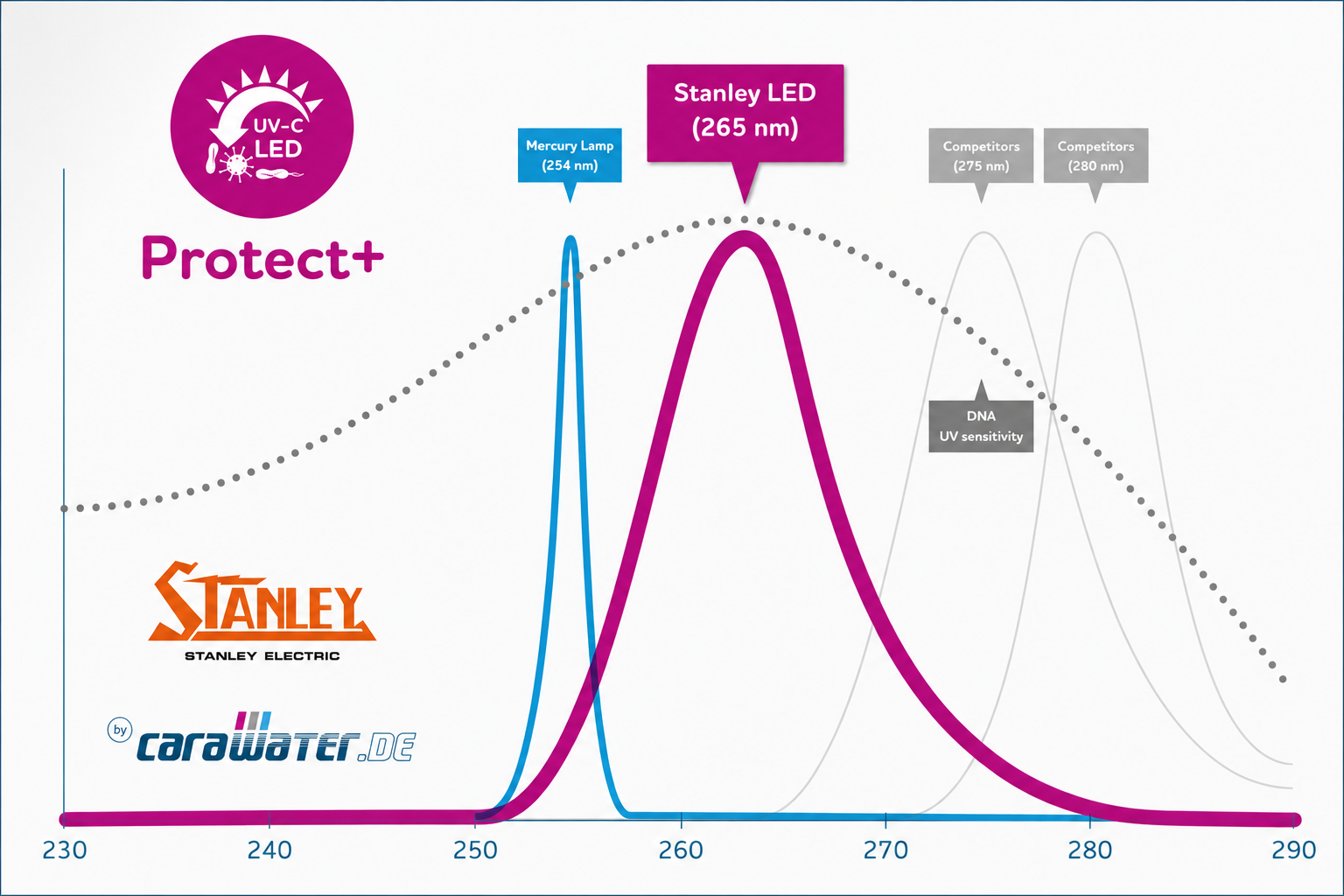
DNA Sensitivity Comparison
The Highest Inactivation Exposure
Efficient disinfection is achieved with the inclusion of a unique patented hydraulic rectification mechanism within the Carawater UV-C reactors. The mechanism controls the water flow to create a 99.999% effective reactor.
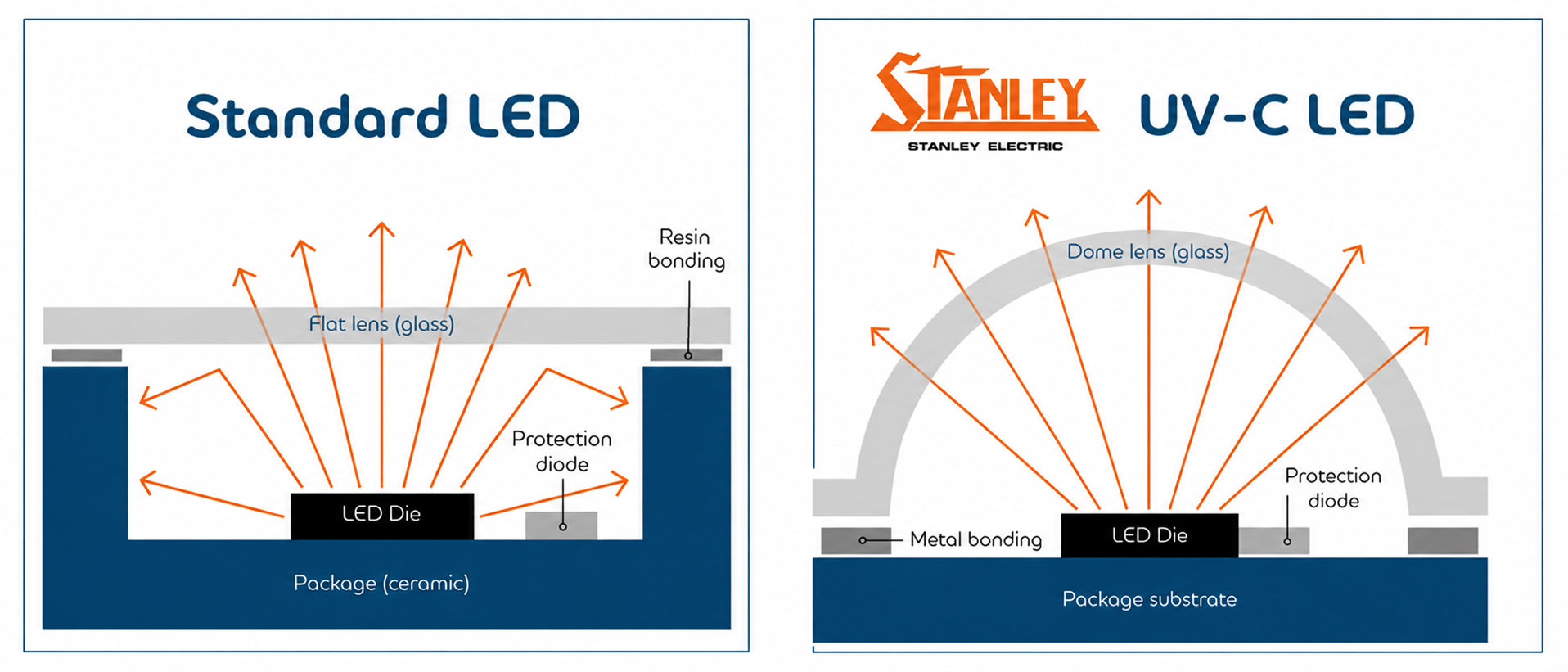
The LED package must allow light emitted from the die to be sent outside without as much loss as possible. Typically, LEDs use a method of bonding the substrate onto a flat-shaped glass lens. However, this causes significant loss of light and the package itself causes light from the die to be attenuated. Then Stanley’s 265 nm UV-C LED uses dome-shaped glass. We can see that there is less light loss compared to flat glass.
UV-C LEDs are easily affected by the external environment and especially when moisture enters the package, there is a risk the LED will not turn on. Stanley’s UV-C LEDs are not of the standard resin-bonded type. Instead the lens and package are joined and sealed with metal to block the inside and outside of the package and prevent moisture penetration
The UV-C Dose, this is shown in unit of measurement (mJ/cm²). Drinking water systems typically aim for a minimum UV dose of 40 mJ/cm² to ensure a high level of disinfection of 99.999% including virus level inactivation. Fresh water used for showering, washing and other non-consumption based uses we suggest a range between 10 mJ/cm² and 20 mJ/cm².
Enhancing UV-C Water Treatment With Pre Filtration
Microscopic contaminants in water can hinder the effectiveness of UV-C disinfection. Particles such as sediment, iron, and manganese can absorb or scatter UV light, creating shadows that allow harmful microorganisms to survive the treatment process.
Pre-filtration addresses this issue by removing these particulates before UV-C exposure, ensuring that the UV light can penetrate the water uniformly and inactivate pathogens effectively.
Carawater’s FILTRADOC Pre and FILTRADOC filters are specifically designed to excel this pre-filtration position, providing an optimal solution to enhance the performance of UV-C water treatment systems.
LED Versus Halogen UV-C
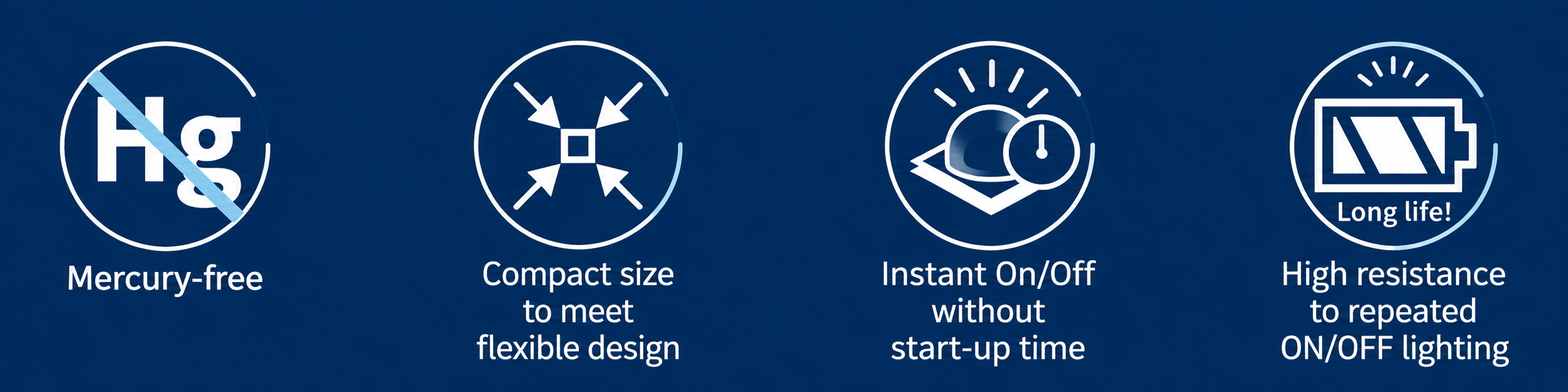
Traditional Argon/Neon UV Lamps are designed to stay on 24 hours per day or at a minimum extended periods as each on/off switching cycle dramatically shortens their lifespan and increases degradation of the wavelength output. Carawater UV-C LED features unlimited on/off switching cycles allowing the light to run on demand, extending their life far beyond any other in the market and maximising energy efficiencies.
The Carawater UV-C LED reaches UV intensity instantly unlike conventional UV systems that require time to “HEAT UP” before us. The Carawater UV-C LED has no delicate quartz or glass components which are prone to breaking and are especially not suitable for mobile solutions due to their fragility.
Key Features
Advanced UV-C LED Technology: The PROTECT + series employs high-performance Patented 265nm UV-C High Powered LEDs from Stanley Electric, delivering a consistent wavelength of 265nm throughout their lifespan. This ensures efficient and reliable disinfection by targeting and neutralising bacteria, viruses, and other pathogens.
Automotive-Grade Certification: Manufactured in compliance with automotive standards (AEC-Q102), these units are designed for durability and reliability, making them ideal for mobile applications including off road and marine applications.
Efficient disinfection: with our unique rectification mechanism and light distribution technology.
Long Operational Life: With a lifespan of up to 10,000 operating hours, the PROTECT + UV-C systems offer long-term, maintenance-free operation, ensuring continuous access to safe water with no degradation. Traditional Mercury Lamps UV-C output decreases (degradation) due to factors such as electrode degradation and mercury vapor pressure changes. For instance, lamps with proprietary coatings, like the LongLife+™ process, can have about 80% of their initial UV-C output at end-of-life.
Unlimited Switching: The additional advantage is that the Carawater UV-C LED systems deliver instant treatment when turned on, this enables the system to only run when you require water. Saving energy and maximising the 10,000 operating hours lifespan. Traditional Mercury Lamps require time to heat up to reach optimum efficiency and frequent on/off cycles can reduce the lifespan of these lamps. Each ignition causes sputtering of the electrode material, leading to electrode wear and a gradual decline in lamp performance. Manufacturers often specify a maximum number of starts to maintain optimal lamp life.
Chemical-Free Disinfection: Utilising UV-C light for disinfection, these systems eliminate the need for chemical additives, preserving the natural taste and quality of your water.
Energy Efficiency: Designed for low energy consumption, the PROTECT UV-C units are suitable for off-grid use, making them perfect for caravans, motorhomes, and marine applications.
Easy Integration: With quick-connect fittings and compact design, these systems can be easily integrated into existing water lines, providing flexibility and convenient installation. Options include central and point of use including integration into tap hardware.