

City Water – Filtration vs Purification for RVs
Water Filtration vs Water Purification is one of the most important distinctions RV owners can make when considering what water system.
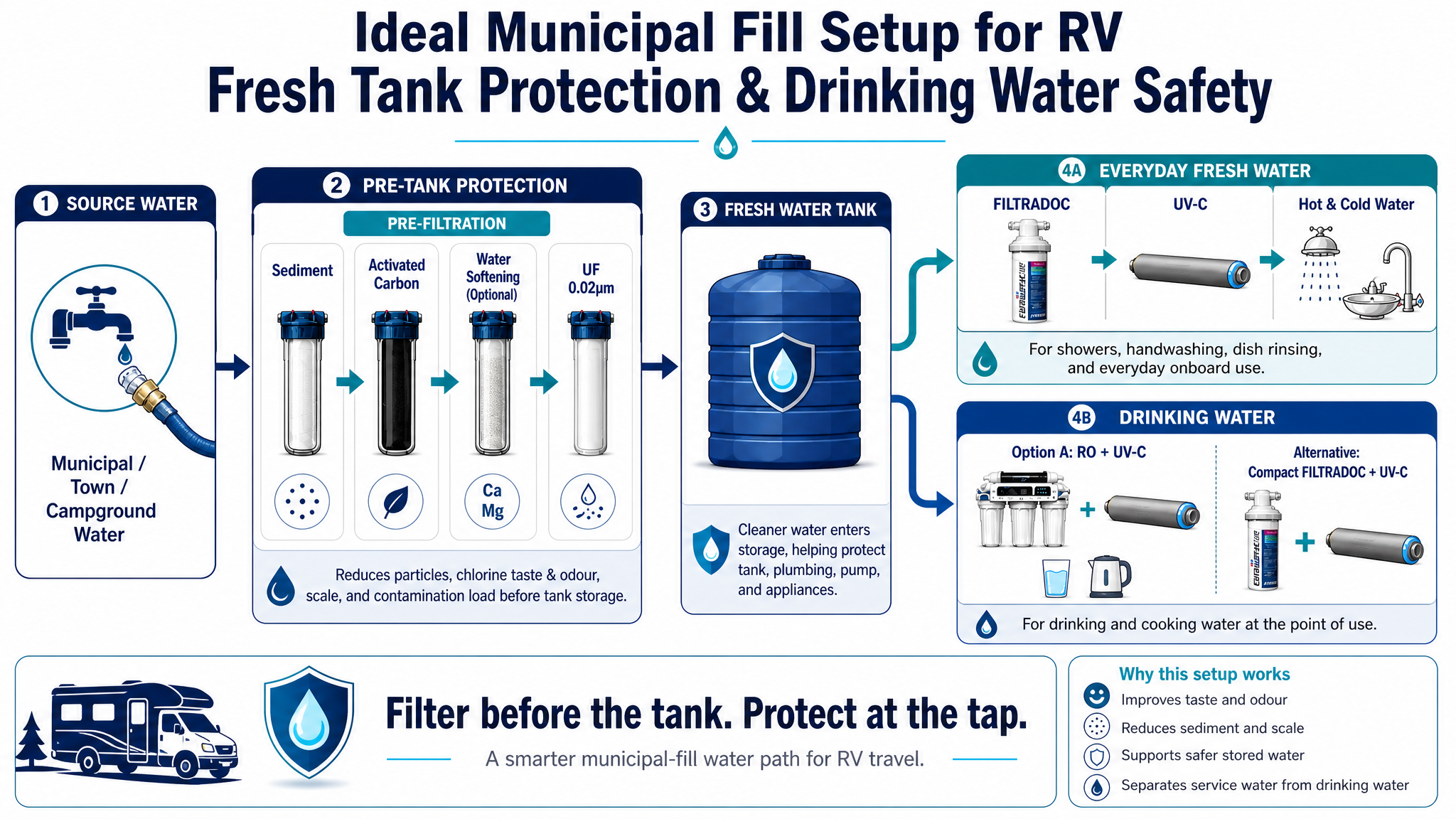
The Best City Water Fill & Use Strategy for Fresh and Drinking Water
Water Filtration vs Water Purification is one of the most important distinctions RV owners can make when considering water filtration system. If your rig usually fills from campground, town, or other city supplies, the question is not whether that water is legally potable at the source. The real question is whether it is still the right quality for your tank, your appliances, your shower, and drinking after hoses, fittings, pipes and on board storage.
For this use case, the recommended approach is a staged water path:
- Pre-filter city water before either direct use or tank filling
- Filter fresh water on demand for everyday use from on board fresh water tank/s
- Purify drinking water separately on demand from either dedicated drinking water or fresh water tank/s
That is the clearest, most practical and optimised for RV owners who want better water without overcomplicating their system.
Water Filtration vs Water Purification: What RV Owners Need to Know
The clearest way to explain Water Filtration vs Water Purification is this: filtration improves water, while purification is designed to protect water that will be consumed.
ALL PURIFIED WATER IS FILTERED BUT NOT ALL FILTERED WATER IS PURIFIED
UNDERSTANDING MICRONS AND WATER FILTRATION
A micron (µm) measures particle (contaminate) size or filter pore size. The smaller the micron rating the smaller the contaminant and the finer the filter pore and the greater the filtration efficiency.
Filters work like strainers or colanders. As pore size gets smaller, the fewer contaminants get through.
In water filtration, the terms nominal and absolute refer to the precision of the filter’s pore size, in other words, how effectively it can block particles of a specific size.
Nominal Micron Rating
- Indicates that the filter will remove approximately a certain percentage (typically 60% to 95%) of particles at or above the stated micron size.
- Filters with a nominal or mean pore size of 1 micron have an average pore size of 1 micron. This means that some pores are smaller and some pores are larger than 1 micron. These filters will let some things that are bigger than 1 micron through the larger holes.
- Common in basic, inexpensive filters
Absolute Micron Rating
- Means the filter is designed to remove ≥99.9% of all particles at the rated micron size or larger.
- For example, if a filter has an absolute pore size of 1 micron, each one of the filter’s pores is 1 micron or smaller. This means that anything larger than 1 micron will be caught in the filter and removed from the filtered water., including pathogens like Giardia and Cryptosporidium cysts.
- Carawater’s Absolute Micron Ratings range from 2-microns for sediment filtration to 0.0001-microns for reverse osmosis, ensuring capability and peace of mind
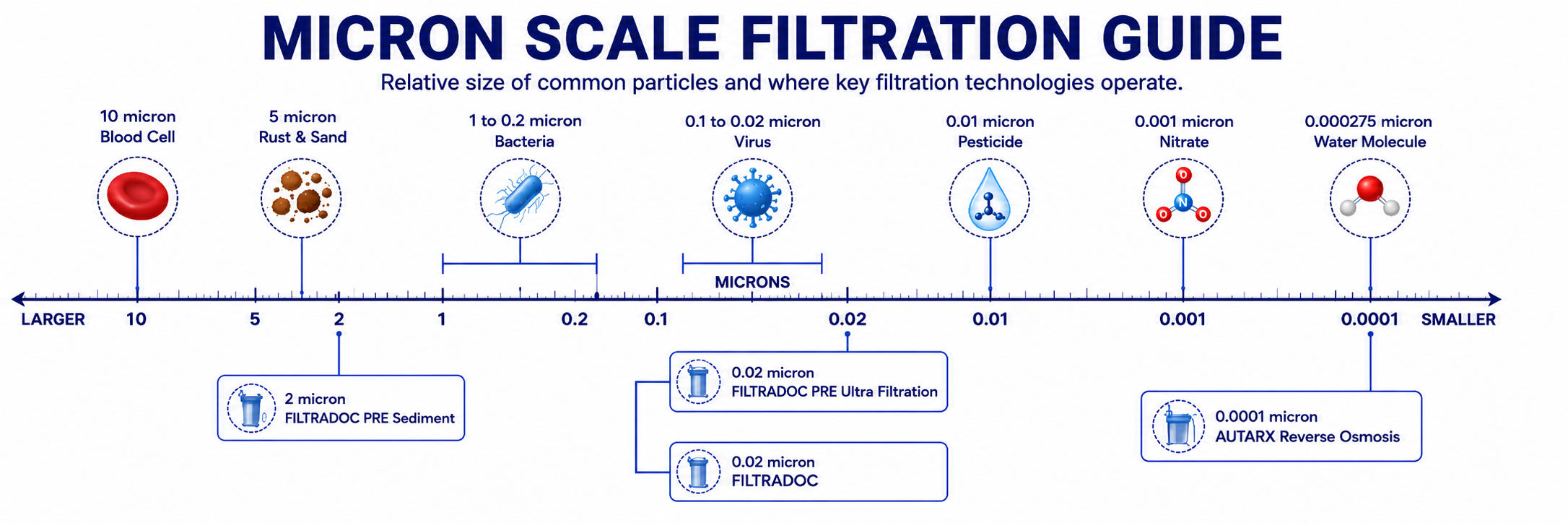
Be sure that when evaluating and comparing filter solutions you have the micron and rating information.
City / Municipal Water
City water is the pressurised water supply provided by local councils, municipalities or government authorised utility providers. This water is delivered directly to homes, businesses including RV parks and fill points, typically via an underground network and is readily available via a tap.
Many RV owners assume city water is already “good enough,” and at the utility level it may well meet drinking-water regulations. But compliant municipal water can still carry characteristics that make pre-filtration worthwhile in a mobile system. EPA regulations themselves are built around multiple contaminant categories, including microorganisms, disinfectants, disinfection by products, inorganic chemicals, organic chemicals, PFAS, and radionuclides. In other words, “regulated” does not mean “nothing left to manage.”
From the RV perspective, the challenge is not only city quality. It is the whole journey from city throughout the RV park which may have been installed decades ago. Maintenance is not routine or preventive on such networks, they are preformed as required, usually when the system fails, this is the reality of underground supply from the city to the spigot.
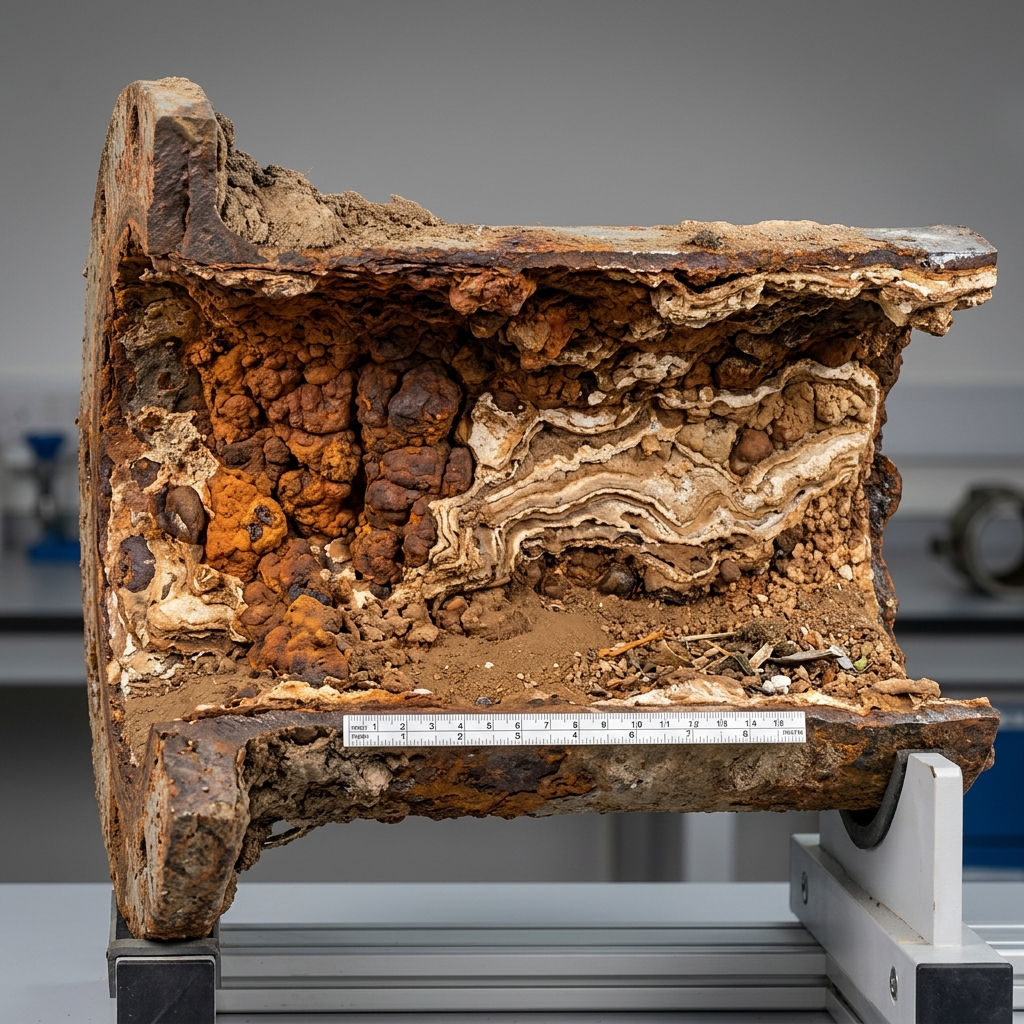
City water can carry unpleasant taste or odour, contaminants, microplastics, and hardness during distribution post treatment that affect user experience, tank cleanliness, appliances, and confidence in the water onboard. The FILTRADOC PRE SPEED range is positioned as the first line of defence precisely because unwanted contaminants are easier to manage before they enter the tank or on board systems and appliances.
Before reaching your tap, city water undergoes multiple stages of treatment and testing at a central water treatment plant. These stages often include:
- Coagulation and filtration to remove dirt, silt, and debris
- Disinfection, most commonly with chlorine or chloramine, to kill harmful bacteria and viruses
- Fluoridation in some regions, for dental health
- Regular testing for contaminants like heavy metals, nitrates, and microbial pathogens
In Australia, city water must comply with the Australian Drinking Water Guidelines (ADWG), established by the National Health and Medical Research Council (NHMRC). These guidelines define acceptable levels of microbiological, chemical, and physical parameters to ensure water is safe for human consumption. These guidelines are not legally binding but are widely adopted as the national benchmark, hence why water quality varies as you travel the country.
In New Zealand, the equivalent standards are defined by Taumata Arowai (the water services regulator) under the Drinking Water Standards for New Zealand.
Even though city water is treated to be safe, it can still contain:
- Residual chlorine or chloramine (which can cause odour, taste, and skin irritation)
- Sediment or rust from aging pipes and infrastructure
- Trace amounts of contaminants
- Minerals that cause scaling or damage to appliances
- Bad taste or odours that affect water quality
Using a multi-stage FILTRADOC PRE Filtration system which includes sediment, activated carbon and ultrafiltration filtration ensures improved taste, protection and added peace of mind.
Filtered water for onboard fresh-water use
Fresh water is not intended for drinking, teeth cleaning, face washing, food preparation or cooking, but it should still be free from harmful contaminants, odours, or discolouration to ensure it is safe for skin contact and daily use.
Fresh water is usually used as required from a city supply when available or stored in a fresh water tank for later use. It should preferably pass through FILTRADOC PRE SPEED sediment, activated carbon and ultrafiltration and optionally water softening before direct on demand use or entering your storage systems.
When stored we then recommend a FILTRADOC or FILTRADOC PROTECT+ UV-C for Post Tank filtration for on demand use to ensure any contamination that may have entered the tank and potentially grown in levels are removed and disabled especially for showering where pathogens can enter through the conjunctiva, the mucous membrane covering the eye or through the nasolacrimal duct which connects the eyes to the nasal cavity.
When using stored fresh water, you are responsible for maintaining the safety of your fresh water. While the water may originally come from a treated or clean source, it can become contaminated in your tanks or pipes without proper care.
Key responsibilities include:
- Ensuring proper pre filtration before tank storage
- Cleaning and sanitising water tanks regularly
- Using safe hoses and connectors when filling and plumbing system
- Preventing bacterial growth during long storage periods
Unlike drinking water, fresh water is not required to meet potable water standards, since it is not consumed. However, it should still be:
- Clear and free of sediment or foul odours
- Safe for contact with skin and surfaces
- Treated to remove bacteria, viruses or contaminants if used for bathing or rinsing food and related items
Poor-quality fresh water can cause:
- Skin irritation or dryness when showering
- Bad smells in your plumbing system
- Stained clothing or dishes
- Biofilm and bacteria build-up in pipes and tanks
- Reduced lifespan of water pumps and appliances
- Possible infections and illnesses
A well designed pre filtration system paired with post tank on demand filtration system allows you to maintain high quality fresh water, improving comfort, hygiene, and peace of mind especially on long or remote trips.
Potable water for drinking and cooking
Drinking water, also known as potable water, is water that has been purified via filtration and disinfected to meet safety standards for human consumption activities including.
- Drinking
- Cooking and food preparation
- Teeth cleaning and face washing
- Preparation of beverages (tea, coffee, etc.)
- Ice for drinks
Potable water must be free from harmful microorganisms including bacteria and viruses, chemical contaminants and excessive minerals or heavy metals.
While travelling the sources of water will vary greatly, hence why you hear comments about water tasting different and even undrinkable. This is why we recommend drinking water always be prefiltered into your dedicated tank and processed on demand via either a dedicated FILTRADOC or FILTRADOC PROTECT+ UV-C system to ensure quality and consistency. Alternately a AUTARX RO system can be used which features remineralisation and PH+.
When you’re travelling, you are responsible for the safety of your drinking water. Even water from a city tap can become unsafe if:
- Your hoses or connectors are contaminated
- Your tanks are contaminated
- Filters are not maintained
Ensuring your water is truly potable means actively managing how it’s collected, filtered, stored, and dispensed.
While standards are legally required for municipal supplies, it’s up to you to ensure your system is capable of meeting or exceeding them.
Even water that looks and smells clean may contain:
- Invisible pathogens from contaminated sources
- Chlorine and by-products from municipal supplies
- Plastic particles, rust, or chemical residue
- Unpleasant tastes and odours that affect your drinking experience
Using a multi stage pre filtration system and on demand filtration systems ensures your drinking water is safe, pleasant to taste and use regardless of where you’re travelling.
Proper drinking water management enhances your independence and supports off-grid travel, especially in remote regions where safe supplies are uncertain.
Choose Your Right Setup
If you mostly stay in parks and use the water direct from the spigot or fill from city water, and want the best balance of performance and practicality, start with FILTRADOC PRE SPEED filtration before the tank or use.
For on demand fresh water filtration after the tank we recommend a dedicated FILTRADOC or FILTRADOC PROTECT+ UV-C system to ensure the quality and safety of water after onboard storage.
Then decide whether your drinking tap should be FILTRADOC PROTECT+ UV-C or AUTARX RO based.